
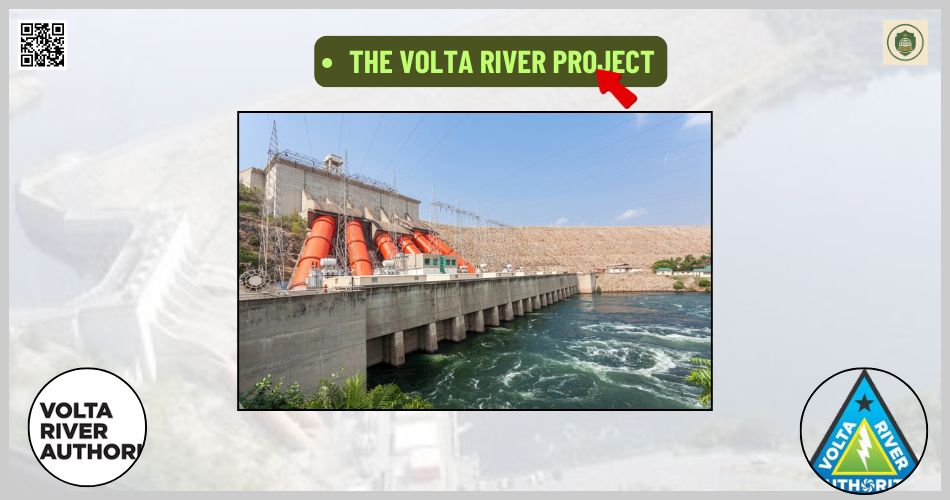
Volta River Project
In the heart of Ghana’s Eastern Region, where the Volta River carves through the Akosombo gorge, a vision was born — one that would reshape a nation’s destiny. The Volta River Project, anchored by the Akosombo Dam, is not just an engineering marvel. It is a story of perseverance, political will, international diplomacy, and the unrelenting pursuit of industrial transformation.
🌍 1915: A Geologist’s Dream
Sir Albert Ernest Kitson’s Discovery:
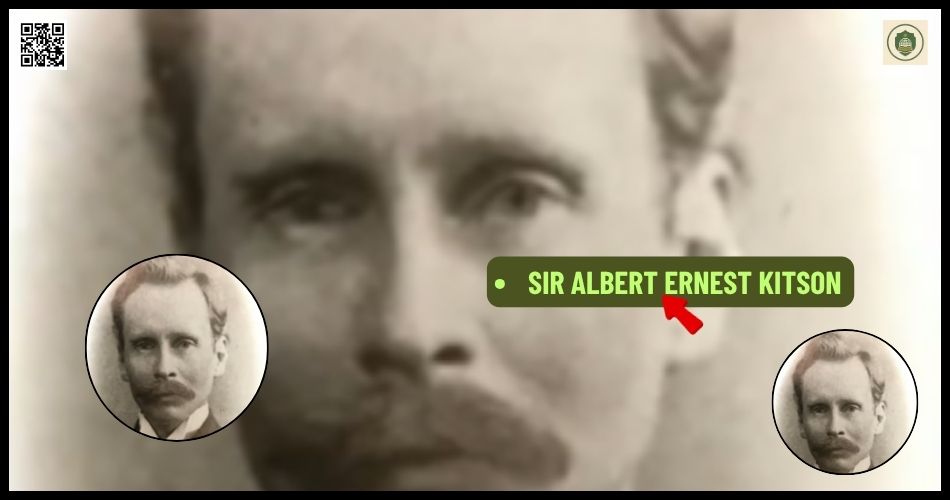
In 1915, British geologist Sir Albert Ernest Kitson officially identified the Akosombo gorge as an ideal location for a future hydropower installation.
Early Blueprints:
While Kitson discovered the site in 1915, the earliest formal blueprint and technical engineering proposals for hydro-electricity in the Volta region were officially documented in 1924.
1944 Reconnaissance:
Kitson’s concept lay largely dormant for decades until 1944, when extensive aerial reconnaissance flights and topographic contour surveys were conducted across the basin to revive development ambitions.
📐 1949–1956: Feasibility and Planning
1949 Commissioning:
The British colonial administration and Gold Coast Government commissioned the engineering firm Sir William Halcrow & Partners in 1949 to investigate the comprehensive development of the Volta Basin.
1951 Halcrow Report:
Halcrow & Partners published their report in 1951, recommending a multi-purpose scheme featuring a dam at Ajena and the construction of a new port at Tema to handle industrial logistics.
1952 White Paper:
A formal government White Paper detailing the multi-purpose industrial project framework was published by the UK and Gold Coast administrations in 1952.
1953 Preparatory Commission:
In 1953, the Volta River Project Preparatory Commission (VRPPC) was formally established to analyse the environmental, economic, and structural layout of the scheme.
1956 Standoff:
The Commission issued its final report in 1956, confirming technical feasibility, skyrocketing global capital costs, shifts in the aluminium market, and political changes caused international financiers to back away from the project.
1957–1959: Independence and the Kaiser Reassessment
1957 Independence:
Following Ghana’s independence on March 6, 1957, Dr Kwame Nkrumah integrated the Volta River Project as the focal centrepiece of his national industrialisation agenda.
1958 US Diplomacy:
To revive the project, Dr Nkrumah travelled to the United States to negotiate with President Eisenhower, who recommended hiring American experts to reassess the financial layout of the project.
1959 Kaiser Reassessment:
The Henry J. Kaiser Company published its Reassessment Report in 1959, which radically optimised the timeline by moving the primary dam site downstream from Ajena to the Akosombo gorge, cutting construction time and lowering capital costs.
Smelter Relocation:
Kaiser also recommended locating the primary aluminium smelter at Tema instead of Kpong, using imported alumina initially to accelerate early profits.
⚖️ 1961: Legal Foundation — Act 46
Passage of Act 46:
On April 26, 1961, the Parliament of Ghana passed the Volta River Development Act, 1961 (Act 46).
VRA Establishment:
Act 46 formally established the Volta River Authority (VRA) as an independent corporate statutory body.
Statutory Mandate:
The VRA was legally charged with constructing the Akosombo dam, generating and distributing power, building a national grid, and overseeing the socio-economic resettlement and environmental stewardship of the basin.
🤝 1962: The VALCO Master Agreement & Act 96
January 1962 Master Agreement:
In January 1962, the Government of Ghana finalised and signed the Master Agreement with the Kaiser-led consortium to form the Volta Aluminium Company Limited (VALCO).
Passage of Act 96:
To validate this monumental transaction, Parliament ratified the Volta River Project (Supplementary Provisions) Act, 1962 (Act 96).
Exemptions from Contract Law:
Act 96 explicitly exempted all scheduled VALCO contracts from sections 5 and 6 of Ghana’s Standard Contracts Act, 1960 (Act 25).
State Guarantees:
Act 96 legally authorised the President to issue sovereign guarantees and borrow or loan funds necessary to fulfil the project’s financial obligations.
Legal Protection:
The act insulated all project agreements from being invalidated by other municipal laws, securing international investor confidence.
World Bank Agreement:
Following this legislation, the foundational World Bank Loan Agreement (Loan No. 310-GH) was signed on February 8, 1962.
💰 Financing the Dream (Capital Ledger)
Public Infrastructure Under Budget:
The final infrastructure cost for the public works (Dam, Power House, Grid) was completed under budget at £G 58 million ($139.2 million USD), down from the original £G 68 million estimate.
International Loan Commitments:
The total international public funding pool established under the 1962 agreements was capped at $190.4 million USD.
World Bank Share:
The International Bank for Reconstruction and Development (World Bank) contributed a $47.0 million USD development loan under Loan No. 310-GH.
Separate Smelter Ledger:
The industrial VALCO smelter at Tema was funded outside the public book, accumulating roughly $96 million USD in separate development capital.
Ex-Im Smelter Loan:
The United States Export-Import Bank provided an industrial credit line of approximately $64 million USD directly to VALCO.
Smelter Shareholder Equity:
Private equity contributions from corporate shareholders, Kaiser Aluminium and Reynolds Metals, totalled approximately $32 million USD.
Summary of the Verified Financial Architecture
- Government of Ghana: $ 98 million (Formed the 51.5% public equity majority stake).
- World Bank (IBRD): $ 47 million (Disbursed via official Loan Agreement 310-GH).
- UK Government: $ 14 million (Allocated for British electrical grid hardware components).
- U.S. Export-Import Bank (Exim): $27.0 Million USD (This agency held the $27M public infrastructure segment).
- United States (US) Aid (USAID): $4.4 Million USD (Initial loan ceiling was $10M; $4.4M was pulled at closeout).
Separate from the dam’s financing, VALCO’s smelter received:
- VALCO Smelter Loan: $\mathbb{C}$77.0 Million (Sourced from independent U.S. Ex-Im industrial credits ($64M USD)
- VALCO Private Equity: $\mathbb{C}$27.3 Million (Direct corporate equity matching $32M USD from Kaiser/Reynolds).
🚧 1961–1965: Construction and Displacement
1961 Construction Launch:
Construction of the Akosombo dam began in 1961, with the main civil works awarded to the Italian consortium Impresit-Girola-Lodigiani (Impregilo).
Massive Resettlement Scope:
The rising waters impounded by the dam created the Volta Lake, flooding 3,275 square miles and displacing over 80,000 people from 739 distinct traditional villages.
Resettlement Budget Overruns:
The VRA’s initial budget allocated £G 3.5 million for resettlement, but the logistical reality exploded by an additional £G 9.5 million to reach a total of £G 13 million.
Government Debt Absorption:
To prevent this massive cost overrun from inflating national electricity tariffs, the central Government of Ghana absorbed the extra £G 9.5 million directly into the state budget.
🎉 1965–1967: Commissioning and Power Operations
September 1965 Completion:
Civil engineering construction on the Akosombo Dam was officially declared complete ahead of schedule in September 1965.
Original 589 MW Capacity:
The original installed generating capacity of the plant at completion was 589 Megawatts (MW) distributed across four initial generating units.
500-Mile Transmission Ring:
By late 1965, the 500-mile-long VRP Transmission Ring was fully operational at 165 KV, delivering power in a closed loop to Accra, Tema, Kumasi, Sekondi-Takoradi, and major gold and diamond mining districts.
1966 Operational Transition:
In October 1966, World Bank monitoring teams verified that technical operations were successfully transitioning from Canada’s Ontario Hydro training staff to an all-Ghanaian workforce.
February 1967 Industrial Launch:
The VALCO aluminium smelter in Tema powered on and initiated primary aluminium production in February 1967, two months ahead of schedule.
June 1967 Closeout:
The World Bank officially closed out Loan 310-GH on June 25, 1967, after verifying successful operation.
Modern Generation Retrofits:
Future plant retrofits added two more generating units, upgrading capacity to 1,020 MW in 2006, and later optimising output to its current capacity of 1,038 MW.
🏙️ 1989: Municipal Authority — EI 42
Promulgation of EI 42:
Following national decentralisation reforms, the Government of Ghana issued Executive Instrument (EI) 42 of May 1989.
Akosombo Township Control:
EI 42 formally granted the VRA local authority powers over Akosombo Township, separate from standard District Assemblies.
87 Non-Political Duties:
Operating through the Akosombo Management Committee, this statutory instrument legally binds the VRA to manage 87 local government functions, including public health, sanitation, waste management, municipal security, estate planning, and local educational infrastructure.
🔄 2005–2025: Reforms and Resilience
2005 Grid Separation:
Under the Power Sector Reform Act of 2005, Ghana unbundled its energy market, officially creating the Ghana Grid Company (GRIDCo) and transferring high-voltage transmission assets out of VRA’s hands.
2023 Spillage Emergency:
Severe, climate-driven hydrological inflows necessitated massive, controlled spillages at Akosombo and Kpong in late 2023, shifting national energy focus toward emergency flood risk management and community structural resilience.
2025 Hybridisation Systems:
In response to accelerating climate change and variable water levels in the Volta Basin, the VRA finalised blueprints in 2025 to integrate large-scale Battery Energy Storage Systems (BESS) alongside new solar farms to diversify and protect the grid.
🌊 Legacy and Lessons
The Volta River Project transformed Ghana’s energy landscape, catalysed industrial growth, and created new livelihoods. Yet it also brought environmental challenges, displacement, and governance complexities. Today, it remains a cornerstone of Ghana’s infrastructure — a testament to bold vision, strategic partnerships, and the enduring power of water.
REFERENCES
- World Bank Group Archives, Folder ID 30297685, Engineering Supervision Dossier, pp. 4–5.
- Volta River Authority (VRA), Modern Operations Manuals & Hydropower Records (For capacity retrofits).
- https://www.ice.org.uk/what-is-civil-engineering/infrastructure-projects/akosombo-dam
- https://www.vra.com/our_mandate/akosombo_hydro_plant.php
- https://en.wikipedia.org/wiki/Akosombo_Dam
- Volta River Project (Supplementary Provisions) Act,1962. ACT 96 (Revised Edition)
- Volta River Authority (VRA) Official Site, Corporate Press Statements, 2023 Flood Mitigation Overhauls & 2025 Renewable Energy Hybridisation Roadmap briefings.
- Republic of Ghana, Power Sector Reform Act of 2005.
- Volta River Authority (VRA) Annual Reports, “Non-Power Activities & Akosombo Management Committee Guidelines”
- Government of Ghana, Statutory Instrument, Executive Instrument (EI) 42 of 1989.
- The Journal of Architecture, Volume 24:4, p. 512.
- World Bank Group Archives, Folder ID 30297685, Operations Log, p. 5.
- Central Intelligence Agency (CIA), Directorate of Intelligence Memorandum, Document No. CIA-RDP85T00875R001700010003-6, Capital Ledger Appendix, p. 7.
❓ Frequently Asked Questions (FAQs)
1. What is the Volta River Project?
- The Volta River Project was a national infrastructure initiative launched in the 1960s to harness the Volta River for hydroelectric power. It included the construction of the Akosombo Dam, the creation of Lake Volta, and the development of an aluminium smelter at Tema.
2. When was the Akosombo Dam constructed?
- Construction began in 1961 and was completed in 1965. The dam was officially commissioned on January 22, 1966.
3. Who initiated the Volta River Project?
- The project was championed by Dr Kwame Nkrumah, Ghana’s first President, as part of his industrialisation vision following independence in 1957.
4. What legal instruments established the project?
- Volta River Development Act, 1961 (Act 46): Created the Volta River Authority (VRA)
- Volta River Project (Supplementary Provisions) Act, 1962 (Act 96): Ratified the VALCO Master Agreement
- Executive Instrument (EI) 42, 1989: Authorised VRA to administer local authority functions in Akosombo Township
5. How was the project financed?
The dam’s construction cost approximately $196 million, funded by:
- Government of Ghana – $98M
- World Bank (IBRD) – $47M
- UK Government – $14M
- U.S. Exim Bank – $10M
- USAID – $27M
Additional financing for the aluminium smelter came from VALCO shareholders and a ₵77 million loan from the U.S. Exim Bank
6. What is Lake Volta?
- Lake Volta is the reservoir created by the Akosombo Dam. It spans 8,502 km², making it the largest man-made lake by surface area in the world.
7. How many people were displaced by the dam?
- Over 80,000 people from more than 700 villages were resettled during the dam’s construction between 1961 and 1965.
8. What is the current power capacity of the Akosombo Dam?
- The dam’s installed capacity is 1,038 MW, following upgrades from its original 912 MW
9. Why does VRA spill water from the reservoir?
- Spillage occurs when water levels exceed safe operating limits. It’s necessary to prevent overtopping and maintain dam integrity, especially during peak inflow seasons.
10. What reforms have affected the Volta River Project?
- 2005: Creation of GRIDCo to manage transmission
- 2023–2025: Climate resilience initiatives, battery storage integration, and flood mitigation following spillage events

